
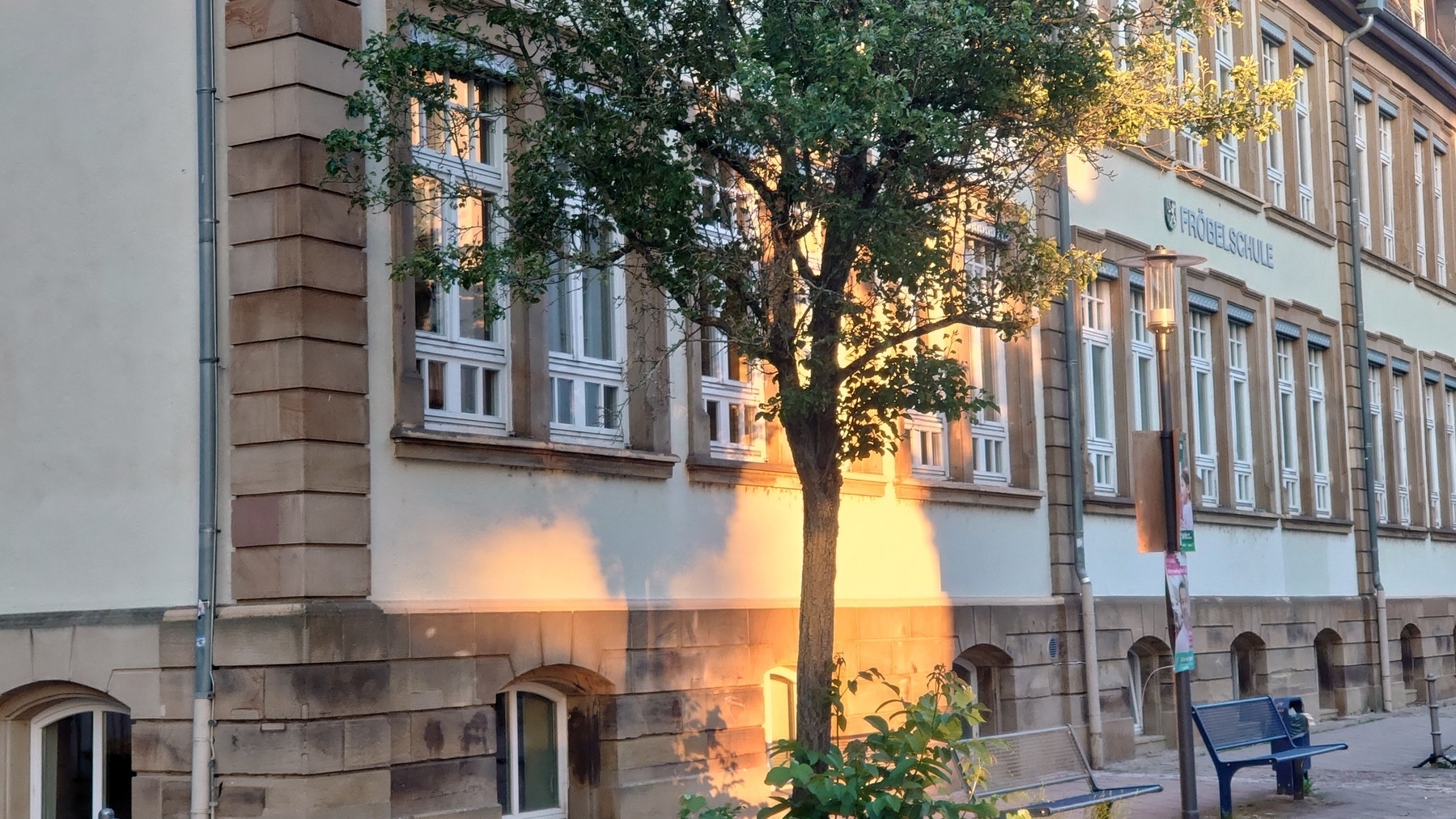
Mask on to prevent as much as possible my COVID virus from wafting over to others, baseball cap on to prevent the sun from burning by forehead or (on the way back) the nape of my neck, and off to school today, to vote.
Heidelberg communal and EU parliamentary elections today.
Following yesterday’s post on my blogging reset, I’m starting the process of consolidating all my historical blogs into one: there will be mistakes and sudden additions and deletions here…
Back to blogging (part... 'n')
Really starting to think of creating my own, eponymous, domain, following my prior experience with switching services, and the logic from micro.blog’s Manton Reece in his online book Indie Microblogging
Domain names are so important because they exist at a layer above any web hosting platforms. If you’re no longer happy with your web host, or they go out of business, it’s your domain name that allows you to move to another web host without breaking URLs, so that readers can still find your content. This level of indirection makes your content portable, which makes it your own.
Caught Covid again, most likely during the travel and flight back from the UK during the Pentecost half term hols. It took me off work for the last couple of days, with shivers and aches, plus a strange fuzziness of the brain that had me not being able to concentrate on anything more than YouTube.
In training
I’m currently in training to play that beast of a trombone solo in Ravel’s Bolero with the Musikfreunde orchestra. It’s not all that long, but it’s very high, and it occurs three times in the piece, plus the even higher bit right at the end. It’s a challenge even for professionals, and pretty daunting for us amateurs.
Our conductor had the decency to ask me if he could add it to this season’s programme, meaning I had time to think and to take up the gauntlet. Since then, I’ve been building up my upper register, practising more frequently than I have in a long time, focussing first on building up my embouchure, and now beginning to get a grip on the music itself.
As Dion Tucker, the jazz trombonist with his YouTube channel, The Chops Shop mentioned in one of his videos, musicians are athletes of the small muscles - and there’s a certain satisfaction in feeling the embouchure muscles firming up and becoming more stable as I continue practising and rehearsing.
PV recycling
This feels important: a relatively clean way to recycle PV cells that’s under development at Wuhan, as described by John Timmer of Ars Technica
But the article from the US National Renewable Energy Lab that’s linked in the Ars Technica puts the whole PV waste potential into perspective. Even in 2050, without any recycling at all, it would be 1000 times less than coal ash and around half that of the delightfully-sounding “oily sludge”, both toxic byproducts of the oil and coal industries.
It feels similar to the arguments about EV batteries, too: the recycling technologies are either there or imaginable, but the market needs to develop in size (and regulation) along with it.
Effective Altruism: Eff-Al good?
I enjoyed reading this article on Wired the other day on the downsides to that apparent silicon valley cult of Effective Altruism. EA (or Alt-Eff, as I like to shorten it, for no particular reason) is on the surface of it an attractive proposition: a well-informed and clever organisation finds the technical metrics for clearly stating the most effective ways of supporting humanity around the globe, and focusses its spending on those.
The trouble is that the whole culture of rationality and programmability pervading silicon valley, added to the lack of time individuals (can) take to analyse the situation for themselves, means that metrics tend towards the overly technical, rational and clear - and thereby susceptible to omission of the humanity behind the sheer number of humans that they purport to aid.
It reminds me of the Aristotelian modes of knowledge of techne and phronesis, which relate to crafting and making (techne) and to inter-relational politics (phronesis). If you are by nature and training a technical person revelling in programming or financial analysis, you are at great risk of missing the interpersonal, or even the overall human aspect of your undertaking.
Tipping already barely stable relationships amongst societies and governments, providing targets for capture by the powerful and unscrupulous, misuse and even environmental pollution are all possible dangers that don’t appear to have been covered in the same way by Alt-Eff as the traditional on-the-ground aid agencies try to deal with.
Better than doing nothing? I’m not even so sure of that - perhaps better that the hugely rich tech bros (and their finance cousins) actually pay fair taxes to their own governments to support funding for inter-governmental overseas aid… Aid and charity are tricky, and that article goes to great depths to show why: worth a read!
"S" "U" EVs
We’ve been looking at switching from our 2015 Toyota Avensis estate to an EV for a while now, but still struggle with the sheer bulk of the “cars” we’ve tried up to now.
From the Tesla Model Y to the Nissan Ariya and VW ID.4 these vehicles have been huge, heavy and remarkably small of boot (trunk).The closest we got to a real car was the NIO ET5, but that ended up being a little too small for us, more akin to a Mercedes A-Class wagon than to our Toyota.
Each time I’ve returned a car from a test drive and driven the first few metres in the Avensis, I’ve felt the familiar lightness of our admittedly underpowered petrol car, in which we’ve driven around 75k km in the nearly 8 years we’ve had it. I wonder if we should just keep running it for another few years until proper electric cars evolve.
There’s an issue with that thought, though: we’d still be burning petrol, and emitting hefty chunks of CO2 (amongst other things) whilst we’re at it. If I look to how far we’ve driven in the Avensis so far, we can see how the emissions stack up.
If we assume a fuel economy of around 7 l/100 km (equivalent to around 34 mpg in old money), and a carbon dioxide emissions rate of 2.35 kg/litre fuel (the American EPA charmingly refers to the number of grams CO2 generated per gallon of gasoline !), we will have burned 5250 litres of fuel and emitted 12337 kg of CO2 in that time… Yes, 12.3 tonnes!
Looking at it another way: If we assume 8.9 (9 is good enough) kWh of electrical energy per litre petrol (a value proffered by the Canadian Government, then our Avensis is running at an average consumption of around 63 kWh / 100 km, which is nearly 3 times that of a Tesla Model Y, which, when we tested it, was showing around 21 kWh / 100 km, on a predominantly Autobahn-based route for a weekend.
So, in one sense, it doesn’t matter that the Y is an SUV: in energy terms, it’s running at around 3 times more efficientuy than the Toyota (and gets more efficient still when we’re on shorter, cross-town or commuting trips). It’s even a few cms shorter than the Avensis, though significantly wider of stance.
But - those shoulders, and the shape of the boot! The Tesla is by far the best of the boots that we’ve encountered so far, but it’s still noticeably shorter than that of the Toyota. We could live with it, but these EV SUVs (SUEVs) are terribly inefficient in space where we need it.
Of course the battery pushes the floor upwards, so EVs tend to end up higher than ICEs, but the rear passengers, growing teenagers, do end up needing to slot their feet under the front seats to have a chance of resting their legs on the seat squabs. Rear seat height seems to be smaller despite the overall height of these cars (10s of cms greater than our car).
Ultimately, the question is about which sort of efficiency we want: energy? There, it’s a clear win for the big EVs. Space and road-space efficiency? Well, the SUEVs are taller and wider than our traditional ICE estate car, but are shorter - tall but still energy efficient isn’t that bad a trade-off. These things seem very width-inefficient, though, and that troubles me.
The switch to EV is a convincing one, but still not compelling - and the reluctance has both reasoned and emotional bases, which makes it all the trickier.