A profoundly musical experience
After briefly (having arrived too late) attending the dress rehearsal this morning, I was inspried to grab a ticket for this evening’s Bachchor concert of Hans Gál’s De Profundis in the Peterskirche Heidelberg - and loved it.
I understand how weird this might seem to read, but De Produndis is a wonderfully 1930s piece with the freedom of rhythm and dissonance that that decade enabled, leading as it did into fascism, Nazism and war; retaining biblical hope but despair, too, for the destruction that must come.
The piece - all 1h 20 minutes of it - was correspondingly moving: thrilling, enthralling and musically often very witty. Gál made great use of flowing chord progressions landing in exquisite dissonance then resolving, settling to calm and clarity, to then unsettle once again: just the modern classical style that I relish.
As so often when I’m a member of the audience rather than the players, I was trying both to pay attention to the music as it hit my consciousness, but also to think about “how we got from there to here”. It’s always a fun mystery for me, when the music is engrossing, flowing and powerful - and there isn’t a hope of hearing any text from what’s being sung.
The Heidelberg symphony orchestra was - largely - great: they have a wonderful sound, based on a very secure low brass and strings - distorted alas by the grim acoustics of the Peterskirche. A few starts and pizzicati were a little “harp-like” in their imprecision, and the lead trumpet felt a little sloppy tonight, but overall they were tight and expressive, a match for the music itself.
The Bachchor were on top of their game, feeling always rhythmically and intonationally secure. The soloists were a mixed bag, the deeper voices outmatching the higher ones: the tenor in particular wasn’t on par.
Overall, it was an invigorating pleasure to have attended that concert. My hearing just about survived it - I felt a familiar “broken speaker” distortion / hissing when the sopranos were at full bore, and the timpani once again played there rumble-blanket effect over everything else going on. With the timps, less is definitely more.
I feel that I could jump back in to singing, see if I can withstand Bachchor and Musikfreunde again. Probably not, but it’s an appealing vision. Perhaps the best would be as my daughter suggested: find some small groups to play and sing in. The main thing is to keep the musical flame aglow, as it brings a strange form of meaning to the world.
And one small note to end on: Gál’s daughter attended the concert, too, having flown in from York to feel hopeful that her father’s music would once more become widely known and a respected part of the classical repertoire.
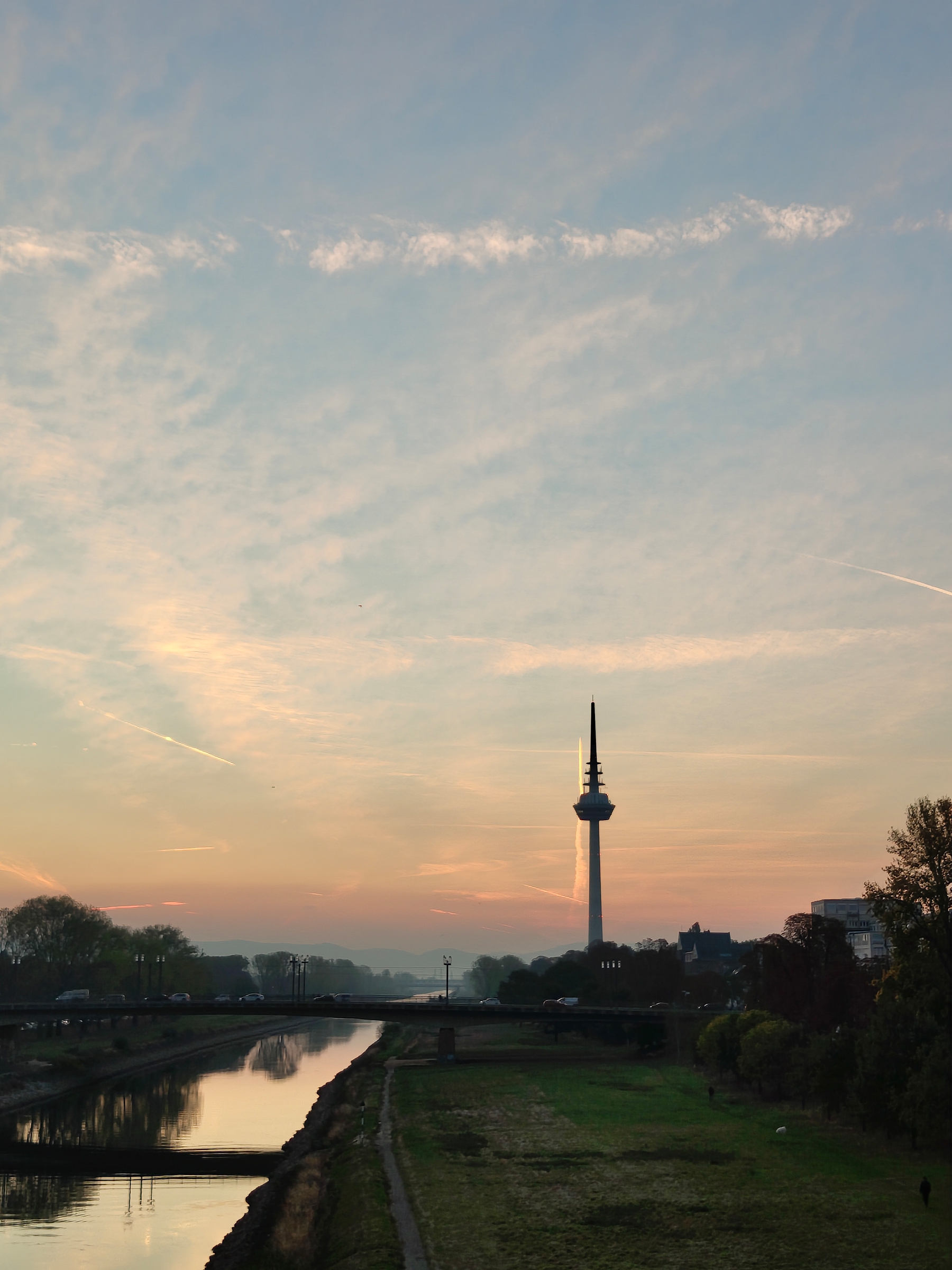
Another Mannheim morning commute photo with the Luisenpark tower flanked by… A rocket? Of course not, but it was amazing to see how “vertically” the plane seemed to be flying next to the tower.
My take on the EU in 2026
It’s easy, I think, to critique any management or government undertaking, but devilishly difficult to actually do it: it’s something I experience at work all the time, even when I’m not a manager, but involved in a (for our medium-sized) significant change project. On the national or supra-national scale, with so many possibilities for critical voices to legitimately be raised, it’s another thing altogether. I feel we need to give governments and institutions like the EU credit for what they do, as an organisation.
So, the first point that stems from this is: given that it is genuinely difficult, should we treat and critique all forms of government equally positively, or is it legitimate - begging the question, here! - to be vehemently against certain forms like dictatorships, monarchies, oligarchies, theocracies and the like? I think it’s fair to say, since we can critique democracies and fascist, authoritarian form of government usually cannot countenance criticism at all, we can treat them differently.
This brings me to an old critique of the EU, voiced without further elaboration in this recent “episode” of the Guardian’s series Dining across the divide, in which an 84-year-old retired journalist and specialist magazine owner states that the EU is clearly anti-democratic and that he voted for Brexit for independence and not for anything to do with economics.
At this point, I think it’s worth reminding myself of the EU’s structure in 2026:
The structure of the EU in 2026
According to the Wikipedia article on The Institutions of the European Union or directly from the EU itself, we have four core institutions that are either directly or indirectly democratic:
- The European Parliament, which is directly elected (representative democracy)
- The European Council, which is indirectly elected, given that it consists of the heads of state of the EU Member States (each themselves democratically elected)
- The Council of the European Union, also indirectly elected, as it consists of designated Ministers from each of the EU Member States (this body is effectively the second chamber working with and buffering against the European Parliament’s perhaps more exuberant law-making)
- The European Commission, which I would say is institutionally neutral, since it’s basically the EU’s civil service.
Is the EU anti-democratic?
Given the above… no. But it is interesting to consider how the EU so often seems to roll out regulations that appear to surpass what any one government or industrial sector (ah, the lobbies…) would ask for - think of environmental regulations (like the packaging and packaging waste example below): is it a democratic following of instructions, or is it democratic leadership acting on a broad mandate? I feel it is the latter - Parliament, the Councils and the Commission have to work together to hammer goals into legislation, and if there is an element of group-think, Parliament and to a certain degree the Councils still have the jeopardy of being voted out if they get things catastrophically wrong. Parliament also has to vote across its constituent parliamentary groupings.
Lobby groups aside, I think most EU inhabitants agree with the general direction of action for the climate, but have to see that their views and challenges are considered and acted upon to retain legitimacy.
Is the EU a bureaucratic behemoth?
Yes. All governments are and if they try not to be, like the current US government, things get very messy quickly. There is a subtler argument here, one that I by now was not surprised to see raised by the Tech-but-mostly-Apple blogger John Gruber on his blog Daring Fireball, who writes, in his post What is the point of the DMA
the point of the DMA is to impose obvious regulatory burdens and bureaucracy upon Apple (and Google, and Microsoft) — and upon the EU citizens who use those companies’ “gatekeeping” platforms and then later, in the same post: I’m sure some of you think I’m all wet in my argument that the point of the DMA was merely to impose ongoing bureaucratic complexity. But my view jibes with the reality of how it’s worked out.
Well, yes. Whilst this comment is specifically targetted at the Digital Markets Act (which, as a set of goals, sounds sensible to me!) I can’t recall any comment from Gruber acknowledging any benefits stemming from the EU or its goals at all, or any sense of there being a right general direction, of it being the right thing for the European continent - and the world - to have. I feel he has put the EU in the same bin (also in the negative sense) as Android or Microsoft: innately incompetent and wrong-headed.
My assertion would be that whilst the EU is heading along the right path, they can and do fail on the implementation, Google and MS are actually going in wrong directions, though their implementations are pretty good (though never as good as Apple’s, of course.)
The EU is bureaucratic, absolutely. But bureaucratic for bureaucracy’s sake? No, I don’t get that impression. I’m sure there are the sorts of people within the EU who think that way, bureaucratic sadists, as it were. I know the general feeling is that the EU is regulating itself to death (see below), but I see the mix of politicians and the commission, plus consultations and feedback working to ensure that things don’t get bureaucratic for the sake of it. Watering down can, alas, happen, but so can streamlining and focussing on the right things.
Having said that… Administration can be a (small business) killer, hopefully not for long
The PPWR, the Packaging and Packaging Waste Regulation along with the EPR, the Extended Producer Responsibility act is causing ructions in EU small businesses.
I recently encountered a post on Mastodon referencing a blog post by Alain Pannetrat of the small electronics retailer Lektronz entitled How Europe is killing makers and micro entrepreneurs. Fundamentally, the PPWR is a great case in point, as Pannetrat puts quite simply and powerfully:
A good idea, a terrible implementation
The fundamental problem that Lektronz raises is that small businesses have to register (and pay for this registration) with each individual EU member state into which they ship. In their example, a small boutique electronics shop in Greece would have to register and report the packaging in which they ship their products in each of France, Belgium, Austria and Germany, for a combined fee (which varies from country to country, of course) of over EUR 1000, potentially more than the value of the goods shipped. It looks ridiculous, and clearly is deserving of ridicule - in the implementation, at least.
If the EU could organise a one-stop registration shop for the whole EU zone (as they managed for taxes paid by small businesses), then that issue should be resolved.
An EU superstate?
Another age-old fear raised by the older chap in the Guardian’s Dining across the Divide post is that of the EU “Superstate”. It’s an old bugbear / straw man set up by any opponent of the EU, because it seems reasonable that the European political elite would want such a thing. But I come back to the democratic aspect of the EU: right now, a federal EU state isn’t on the cards, since there isn’t a clear mandate or majority to achieve it. The phrase “ever closer union” sounds perhaps scary to sovereigntists who hate the idea either of a homogenising authority, or of having to deal with the French on equal terms - but the path to a single Superstate simply hasn’t been described yet, let alone planned. The ever closer union has a lot of incremental steps to achieve on things like packaging or PFAS or immigration before ever being able to consider federalising.
And, in any case: does anybody call the USA a “Superstate”? Or China? It seems to be a pejorative term reserved for the EU itself, a “Buhmann” as the Germans would call it.
A homogenenising hegemony?
Well, of course not! In the European Parliament, members from Member State parties are bundled into larger political groups, and some have more seats than others. But, as in any properly democratic system, it’s a far cry from a hegemony.
But the EU’s key opponents themselves certainly tend in that direction, as seen in the upcoming probably miserable elections in the German state of Saxony-Anhalt:
On average, East Germans remain considerably poorer than their western counterparts. They possess significantly less wealth, inherit much less and often face markedly weaker career prospects. A lingering feeling of being “second-class citizens” has become deeply entrenched, extending even to generations born long after German reunification. I can understand these feelings, and I can understand how the AfD has channelled this pervasive sense of abandonment… … What I can’t understand is that the people I grew up among are failing to see how hollow the AfD’s promises are.
Summing up
I haven’t even touched on the geopolitical aspects of the EU as counterweight to the USA’s uncomfortably near-fascist turn, to China and to whatever Russia (or, at least its President and oligarchical “friends”) thinks it is. That alone is enough to make me a strong proponent of the EU - these “smaller”, internal issues are the ones that I kept encountering in the run-up to the Brexit referendum, and keep on seeing now, too.
Fundamentally, then, I’m pro-European and want to see it succeed and - along with its population(s) - thrive.
Much
Once again, it’s unbearably hot, the nights aren’t cooling and nature, along with us humans, is suffering. Yet the roads are still full of mostly combustion-engined vehicles, EVs sloughing off tyre particulates, the skies full of aircraft. It’s amazing - but not at all surprising - that we all don’t just stop to think about what we’re doing to everything.
Last month, during the second - and so far worst - heatwave, Ars Technica hosted an article from Inside Climate News on the “sad inevitability” of Europe’s heatwave. I have to say, the article takes its time to get to the point, embellishing everything with the effects rather than the contributing factors involved in the whole miserable set of conditions we’re still in. But eventually the authors started linking to papers such as one from PNAS called simply and clearly Climate change will accelerate the high-end risk of compound drought and heatwave events.
Ultimately, we really really do need to aim for and hit net zero - but with everyone carrying on as normal for as long as possible (hindered by bosses worrying more that we won’t be productive enough, our only chance is to focus on large-scale structural change, voting for parties that will prioritise climate action, and switching economies to carbon-neutral industries.
In this context, the prospect of a company like VW looking to jettison tens of thousands of jobs, maybe a hundred thousand looks scary - but perhaps Volkswagen with its trade unions and state investments is a good place to start: they will be able to (have to!) throw resources at aiding their employees in the search for transformation jobs in transformation industries. The Americans and Chinese would basically just dump the jobless on suddenly underfunded communities, as the British did to the mining towns in the 1980s. The fear is that the sclerotic and currently very fossil-conservative government here in Germany will combine to prevent any sort of realignment towards energy efficiency or transformation.
In the meantime, I voted in a local referendum for a large wind turbine project that’s been proposed for the nearby hills: news just in - it turns out that 2/3 of those who voted voted for the project to continue… So that’s something, I guess!
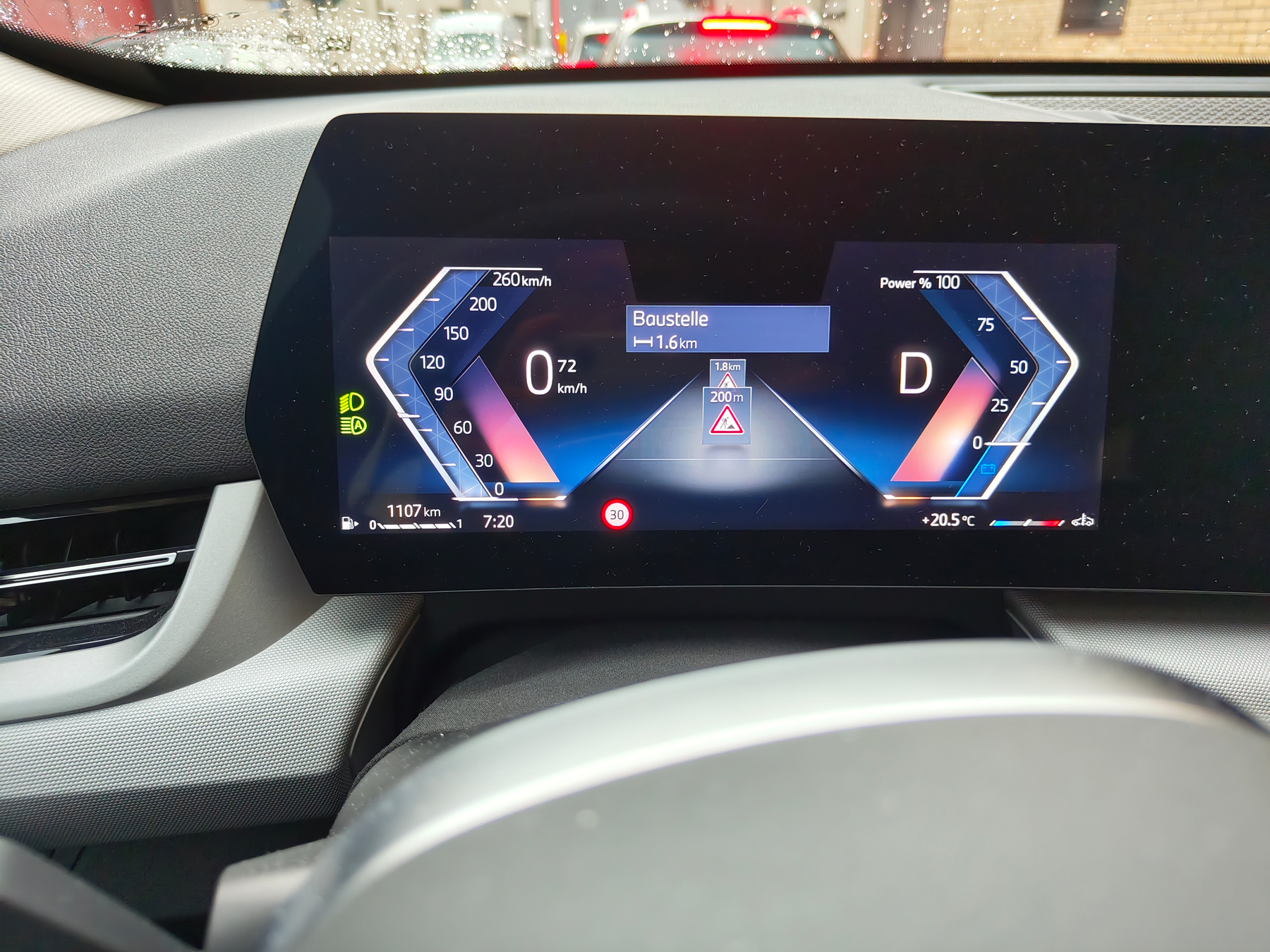
I don’t know, but shouldn’t someone high up at BMW have simply said that their driver binnacle display has too much of a bad PowerPoint presentation?
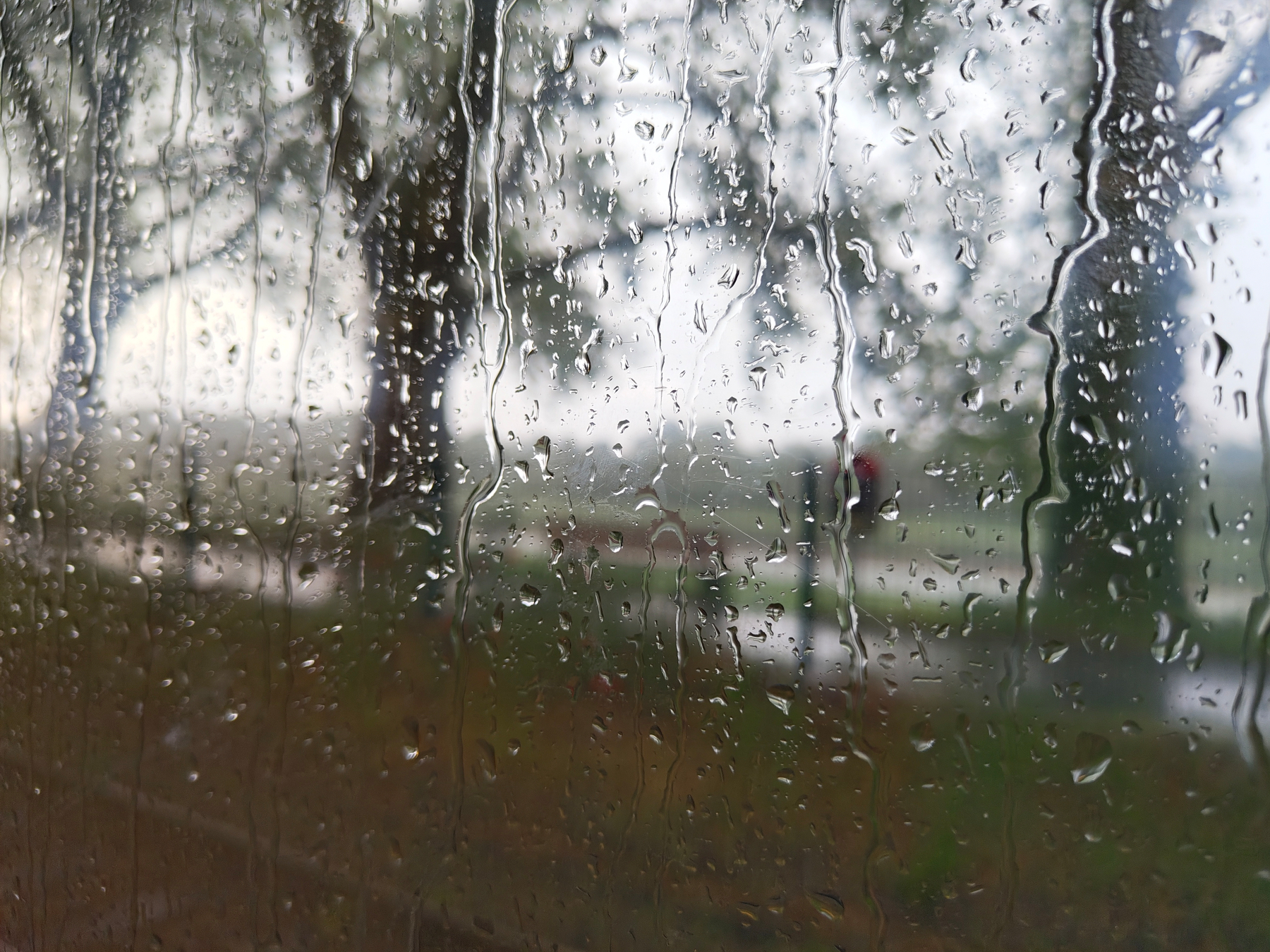
Just for the record, nothing new or exciting, merely pointing out the obvious: these past two weeks of heat and heat and more have been a total misery.
Writing this on a short weekend break in the North Alsace region, which should have been lovely, but is also just brutally hot.
AI self-importance and belief
I listened to (not watched) an episode of The Rest is Politics Leading on the way into work this morning, an interview on AI with Jack Clark from Anthropic: having just switched from reading Naomi Klein’s This changes Everything on the first tram of the day, I was shocked by Rory Stewart’s assertion in his introduction that AI is the most important topic in politics, ahead of immigration, housing, cost of living “or anything”… No mention of climate at all (that’s just a sundry others topic, I guess?)
Also noticed Clark’s assertion that it was important for researchers to believe that they were working on something inevitably and inherently powerful.
It’s all so helpful! www.theguardian.com/politics/… www.theguardian.com/uk-news/2…